

Yesterday’s Future: Don Buchla’s Legacy and The MEMS Project
Yesterday’s Future: Don Buchla’s Legacy and The MEMS Project
Share this event
Yesterday’s Future: Don Buchla’s Legacy and The MEMS Project
The opening afternoon event will feature two different lecture-demonstrations by the MEMS Project showcasing their work with two of Don Buchla’s most unusual modules.
The first presentation will focus on the slideshow controller module, which Buchla developed in the mid-1960s as part of the psychedelic house lighting equipment in NYC’s Electric Circus. The slideshow controller takes input from a synthesizer and uses it to control old-school slide projectors, allowing the musician to create an immersive audio-visual experience. MEMS will discuss how this module works and how and why Buchla created it. Slideshows created using the module will be demonstrated for the audience.
The second presentation will focus on the 276 EEG Conditioner, a module designed to connect to electrodes attached to the user’s head and allow the user to control a synthesizer with their brainwaves. MEMS traveled to EMEAPP/MMT to study and reproduce Buchla’s original 276 prototype, which is part of our permanent collection. This lecture will focus on the evolution of brainwave controllers and how Buchla was inspired to create one. This lecture will also feature a demonstration of the 276 module using a volunteer from the audience. There will be time after the lecture for additional audience members to try out the system.
There is no admission fee but donations are encouraged and gratefully received. Please register for each event separately. Seating is limited, so please contact us if you have signed up and can no longer attend so we can make your seats available to others.
Note: This is the registration page for in-person tickets only. To register for the livestream instead, click here.
1:00-2:00pm Slideshow Controller Lecture and Demonstration
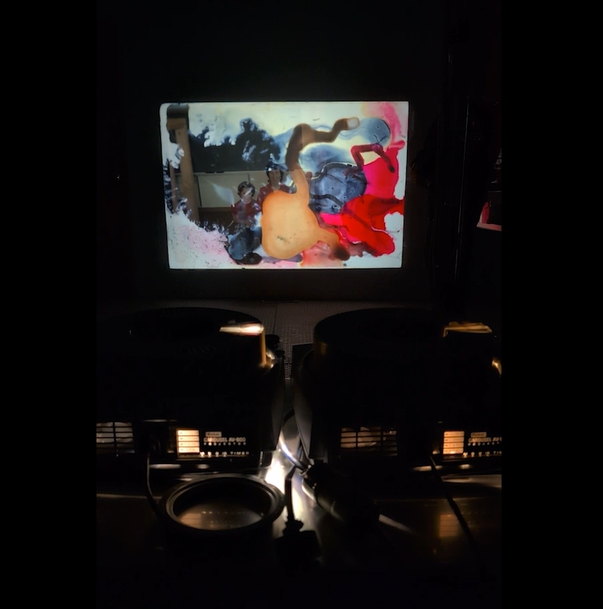
The first presentation will focus on the slideshow controller module, which Buchla developed in the mid-1960s as part of the psychedelic house lighting equipment in NYC’s Electric Circus. The slideshow controller takes input from a synthesizer and uses it to control old-school slide projectors, allowing the musician to create an immersive audio-visual experience. MEMS will discuss how this module works and how and why Buchla created it. Slideshows created using the module will be demonstrated for the audience. This lecture will run approximately 45 minutes with a 15 minute Q&A period.
2:15-5:00pm EEG Controller Lecture and Demonstration
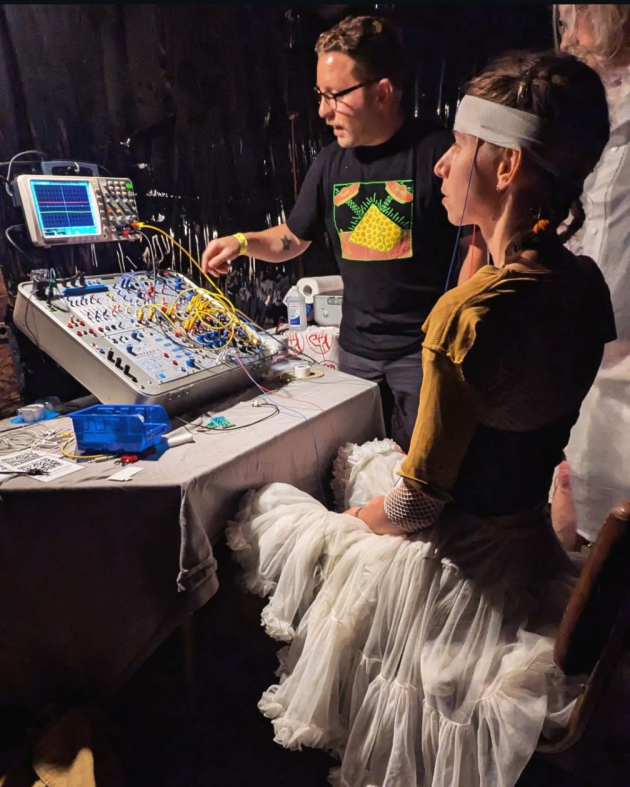
The second presentation will focus on the 276 EEG Conditioner, a module designed to connect to electrodes attached to the user’s head and allow the user to control a synthesizer with their brainwaves. MEMS traveled to EMEAPP/MMT to study and reproduce Buchla’s original 276 prototype, which is part of our permanent collection. This lecture will focus on the evolution of brainwave controllers and how Buchla was inspired to create one. This lecture will also feature a demonstration of the 276 module using a volunteer from the audience. There will be time after the lecture for additional audience members to try out the system. This lecture will run approximately 45 minutes followed by time for audience members to observe others trying the module or to try it themselves!
NOTE: The building will close at 5pm and reopen at 7:30 for the evening lecture and performance (please register for tickets separately HERE). We are happy to provide recommendations for area restaurants for dinner!
THE MEMS PROJECT
The MEMS Project is a group of researchers who reverse engineer rare Buchla modules and prototypes and create period accurate replicas. They hand-trace Buchla’s original circuit boards then translate the board layouts to CAD files so replicas can be fabricated. Period-accurate parts are used when available to emulate the Buchla’s original circuitry as closely as possible. More info can be found at memsproject.info.

This event is part of EMEAPP/MMT's special exhibition Instruments That Talk Back: Celebrating the Legacy of Don Buchla. Funding for this exhibition has been provided by The Pew Center for Arts & Heritage. We are deeply grateful for their support.
Location
Museum of Music Technology, 19438